
Why most PAC fundraisers plateau
PAC fundraising tends to hit a ceiling, for two reasons.
The volunteers run out. Most school fundraisers follow the same pattern: the PAC buys something, sells it to families and handles everything in between. Orders have to be collected and checked, items sorted by classroom, and mix-ups fixed afterwards. The bigger the fundraiser, the bigger that job gets, and a lean PAC can only take on so much.
The family budget runs out. Every dollar a PAC raises comes from parents, and parents only have so much to spend on school. Each new fundraiser competes for the same money. That's why food fundraisers like hot lunch do best: lunch is already in the family budget, so buying it through the school isn't extra spending. Chocolate, poinsettias and spirit wear are extras, and extras are the first thing a family skips.
So a fundraiser that keeps growing has to do two things: run without more volunteer work, and draw on money families already spend.
The voucher fundraiser: a good idea that rarely paid off
A local café, bakery or pizza place sells vouchers through the PAC. Families get a deal, the store gets new customers, and the PAC keeps the difference. It all comes from spending families already do: a coffee they'd buy anyway now helps the school.
The PAC never touches the coffee or the pizza. The store does what it already does.
On paper it's an ideal fundraiser. In practice, the paper was the problem:
- Printing the store has to print the vouchers before anything can be sold.
- Sorting and sending home the PAC sorts vouchers by family and sends them home in backpacks, and some never make it.
- Keeping families have to keep a slip of paper safe until they use it. Many get lost or forgotten in a drawer.
- Checking the store has to collect the slips and count them, and the PAC has to work out what it owes.
All that waiting and keeping made paper vouchers a hassle for parents to use, so voucher fundraisers stayed a small extra, never a real money maker.
Electronic vouchers: the same idea, without the paper
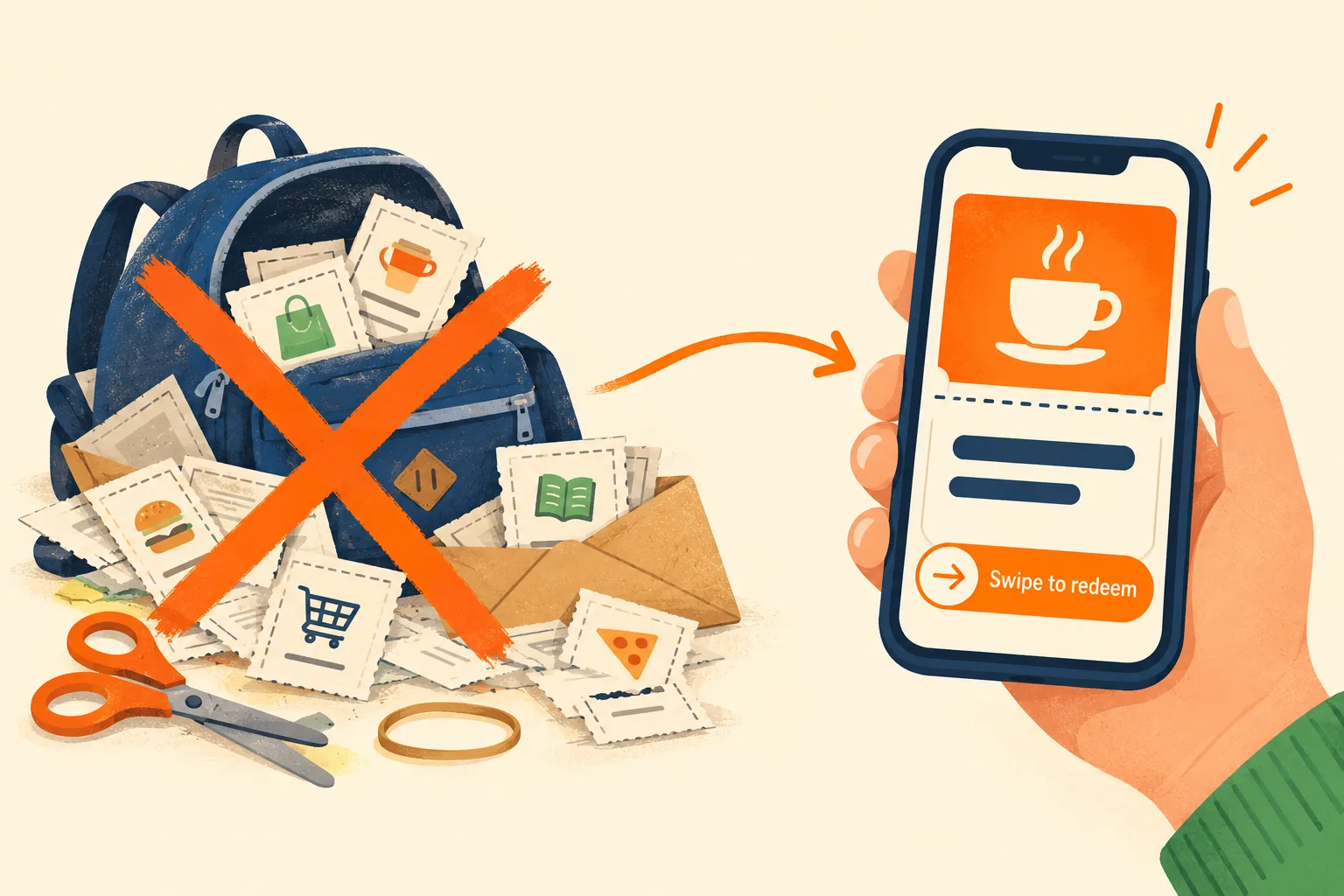
Take the paper away and the voucher fundraiser finally works. In PACmeFUNd, vouchers are bought, kept and used in the app:
- The PAC and the store set the deal What the voucher gets, its price, how many can be sold and when it's valid.
- Families buy in the app A voucher event works like any other PAC event: parents see it in the app and pay by card. While it's open, they can buy whenever it suits them, even on the way into the store.
- Staff watch the swipe The family swipes at the counter. It's stamped Redeemed and can't be used again.
- The store gets a report The next morning, an email lists what was redeemed. The PAC pays the store in one payment.
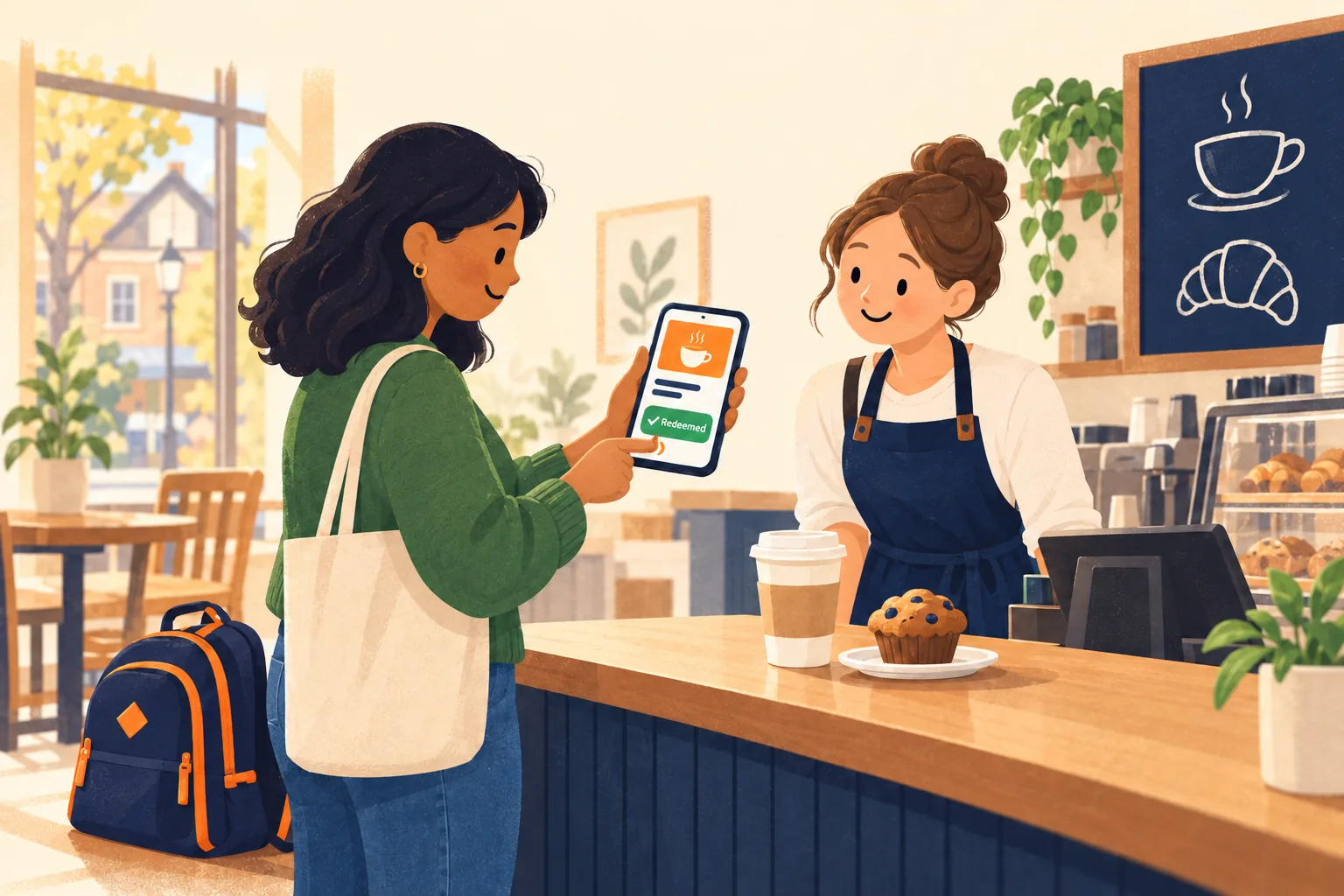
Nothing to print, send home or lose. The store installs nothing, and families pay by card in the app, straight to the PAC's bank account.
The PAC's only work is setting up the deal once. After that, the fundraiser runs on its own.
How the money works
The PAC's revenue is the difference between what families pay for a voucher and what the PAC pays the store for it.
Here's an example. The numbers are made up, so agree your own with the store.
- A café sells a large latte for $6.50.
- The café agrees to let the PAC sell a latte voucher for $5.50, and to charge the PAC $4.00 for each one redeemed.
- A family saves $1.00. The café gets a visit, and often a muffin to go with the latte.
- The PAC keeps $1.50 per voucher, before card processing and platform fees.
The margin can be bigger than it looks. For the store, it's a group order from a few hundred families, paid by cheque or e-transfer once the count is settled, so no card fees. It's also marketing to school families. That leaves room for a deep discount.
And you're not limited to one store. The café, the bakery, the pizza place, the bubble tea shop: every business near your school is another fundraiser you can run, with almost no extra work for each one.
Setting up a voucher fundraiser that works
- Pick stores families already visit The café near the school, the Friday pizza place. A deal on something families already buy sells itself.
- Agree a price that includes GST GST applies to vouchers, so agreeing a GST-included price up front avoids surprises on the store's bill.
- Set it up like any other event Add the vouchers to a menu and create the event, just as you would for hot lunch.
If a store has questions, point them to how voucher fundraisers work for stores.
Common questions
Is a voucher fundraiser worth it for a small PAC?
Yes, and arguably more so. A small PAC has the least volunteer time to spare, and a voucher fundraiser needs very little once it's set up. There's nothing to hand out and nothing to sort.
Does the store need an app or an account?
No. Staff look at the family's phone and watch the swipe. The store gets its redemption report by email.
Who pays the store, and when?
The PAC pays the store directly, by cheque or e-transfer, once the number of vouchers sold is settled: usually when they sell out or the event ends. The store's report lists every redeemed voucher with its number, item and time, so both sides see the same numbers.